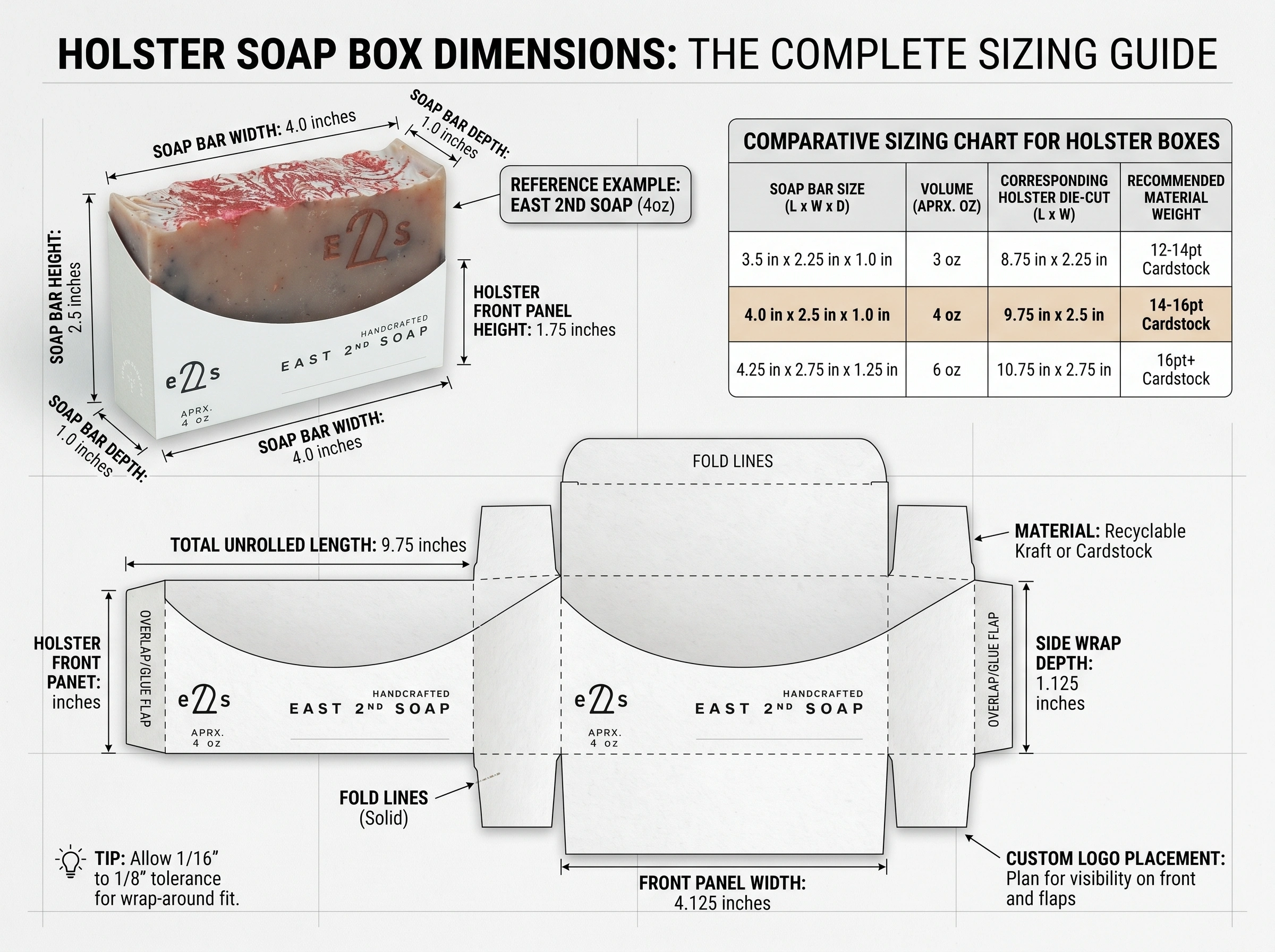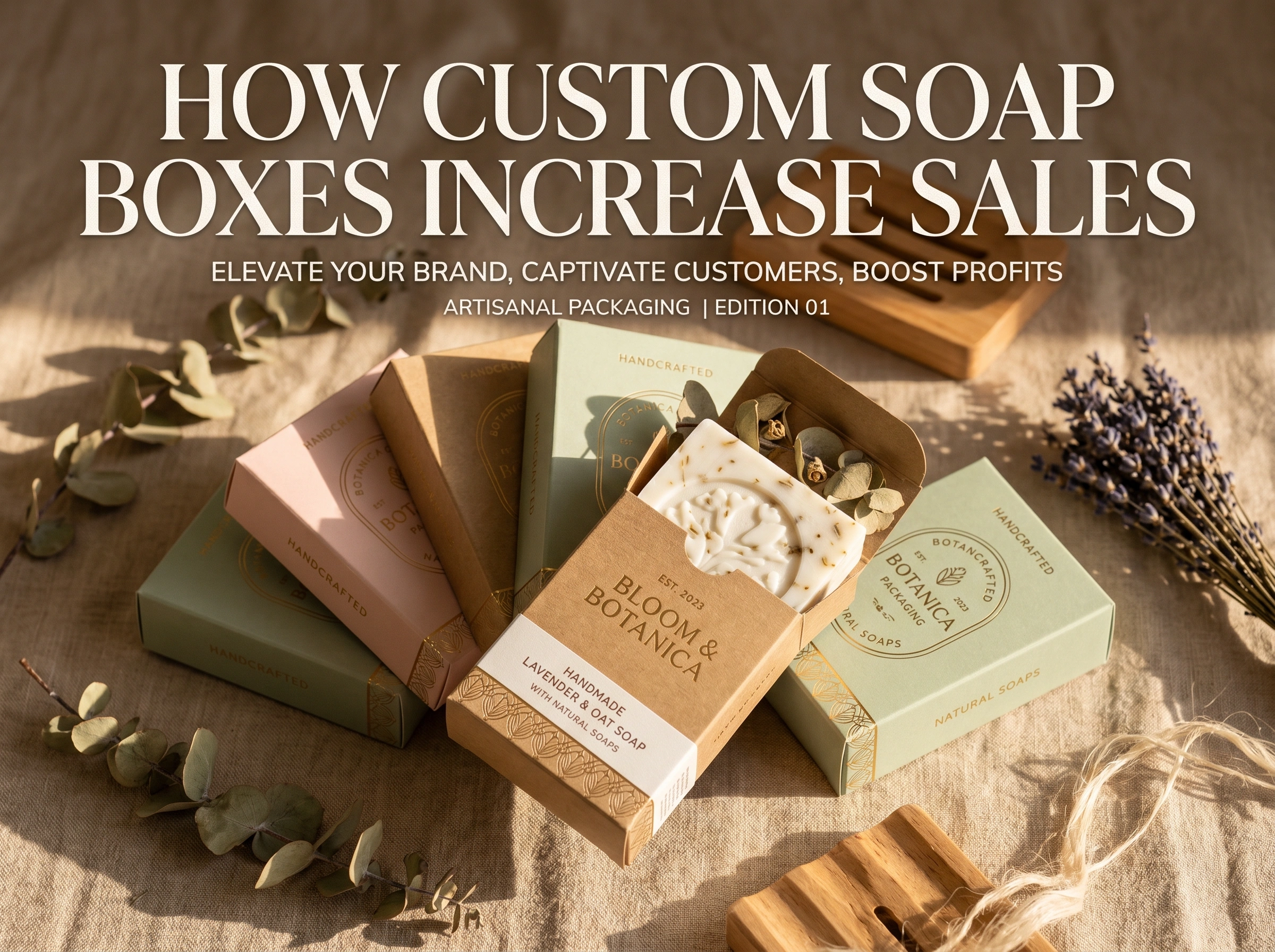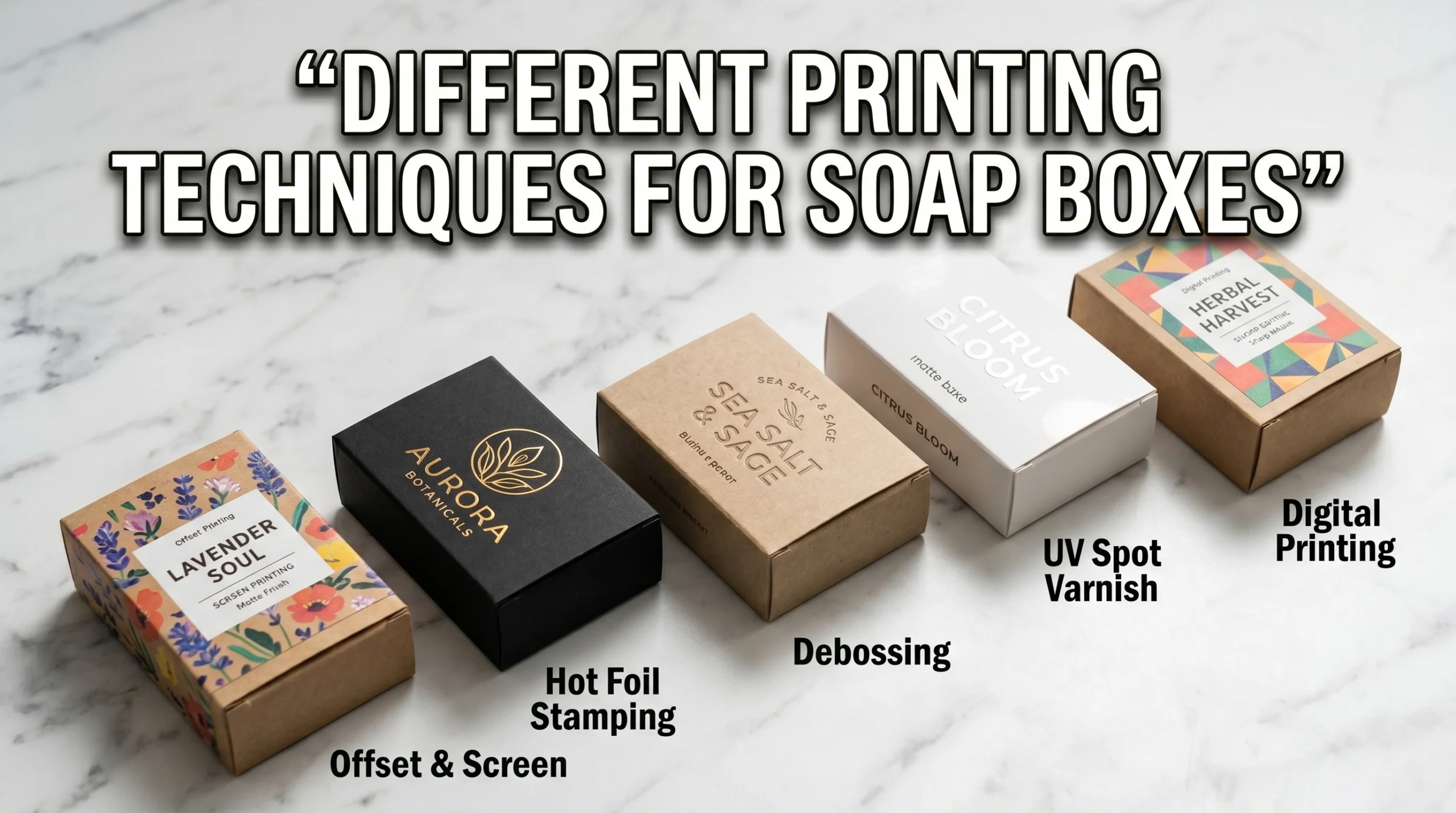
Soap box printing techniques include offset lithography, digital printing, flexographic printing, screen printing, letterpress, hot foil stamping, embossing, debossing, and UV/spot UV printing. Each method differs in cost, minimum order quantity, color depth, and finish quality. Digital printing works best for small runs with no minimum order. Offset lithography delivers the lowest cost per unit at high volume. Foil stamping and spot UV coating add luxury appeal to custom soap packaging. The right choice depends on your brand goals, budget, and production volume.
Why Your Soap Box Is a Silent Salesperson
Picture this: a customer walks into a boutique bath shop. Three artisan soap bars sit side by side same price, same scent family. One comes in a plain wrap. One has a smudged label. The third has a crisp, matte lamination finish with a hot foil stamped logo that catches the light.
Which one goes in the basket?
Every time.
That is what soap box printing does for your brand. It converts a $4 bar of soap into a $12 perceived value product before the customer reads a single word. In 2026, with DTC soap box branding exploding and retail packaging shelves more crowded than ever, the right printing technique for soap boxes is not a decoration it is a business decision.
This guide covers every major soap box printing method, compares them honestly, flags what actually works at different budget levels, and answers the exact questions Google users are searching for right now.
All Printing Techniques for Soap Boxes at a Glance
| Printing Technique | Best For | Min. Order | Cost Level | Color Range | Speed |
|---|---|---|---|---|---|
| Offset lithography | High-volume retail packaging | 5,000+ | Low/unit | Full CMYK + Pantone | Moderate |
| Digital printing | Short runs, personalized soap packaging | 1+ | Medium/unit | Full color | Fast |
| Flexographic printing | Wholesale soap boxes, Kraft paper | 1,000+ | Low/unit | Limited Pantone | Fast |
| Screen printing | Bold, 1–4 color artisan soap branding | 100+ | Medium | Spot color | Moderate |
| Letterpress | Premium handmade soap packaging | 50+ | High | 1–3 colors | Slow |
| Hot foil stamping | Luxury soap boxes, accents | 500+ | High | Metallic/foil | Slow |
| Embossing/Debossing | Texture on gift soap packaging | 500+ | High | None (texture only) | Slow |
| UV / Spot UV | Shelf appeal, premium finish | 250+ | Medium-High | Full + gloss accent | Moderate |
The 8 Printing Techniques for Soap Boxes
1. Offset Lithography The Volume King
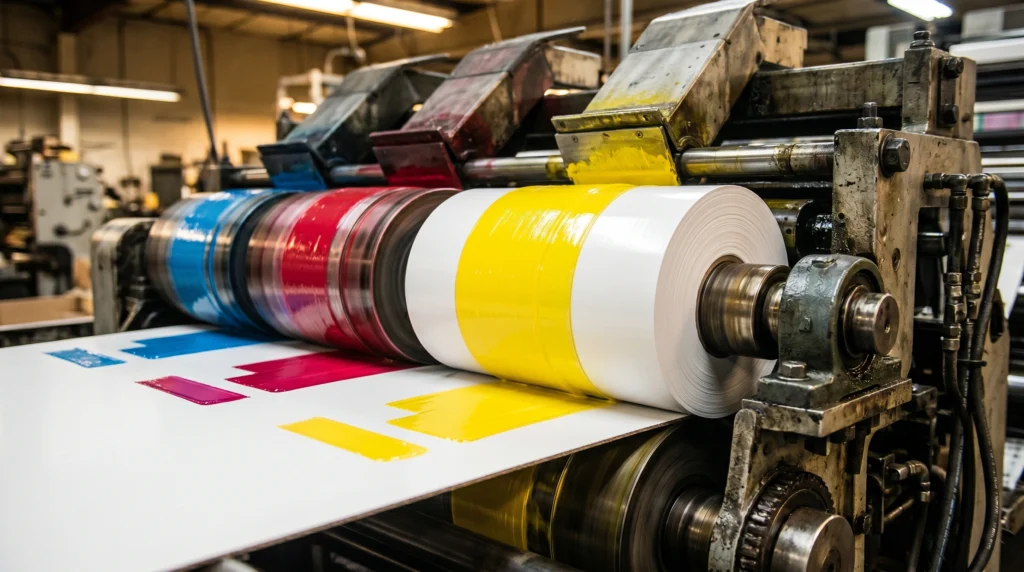
Offset printing transfers ink from a metal plate to a rubber blanket, then onto SBS board, CCNB paperboard, or coated paperboard. It is the most widely used method for large-scale soap box printing worldwide and for good reason.
What makes it work: The CMYK printing process lays down four ink layers (cyan, magenta, yellow, black) in precise registration, delivering photographic-quality imagery and razor-sharp text. Add Pantone color matching and you get brand-consistent results across 50,000 units that look identical from box one to box fifty thousand.
Real numbers: Setup plates cost $500–$2,000 per job. At 10,000 units, cost per custom soap box drops to $0.20–$0.60 depending on size and print finish. That is hard to beat.
Best pairing: Gloss lamination or matte lamination post-print. For premium runs, add spot UV coating over the logo.
Watch out for: Long lead times (10–20 days), and it is not cost-effective below 5,000 units. For small artisan soap batches, skip this and go digital.
Certifications to ask for: ISO 12647 and G7 color standard for ΔE color consistency across runs.
2. Digital Printing The Smart Choice for Growing Brands
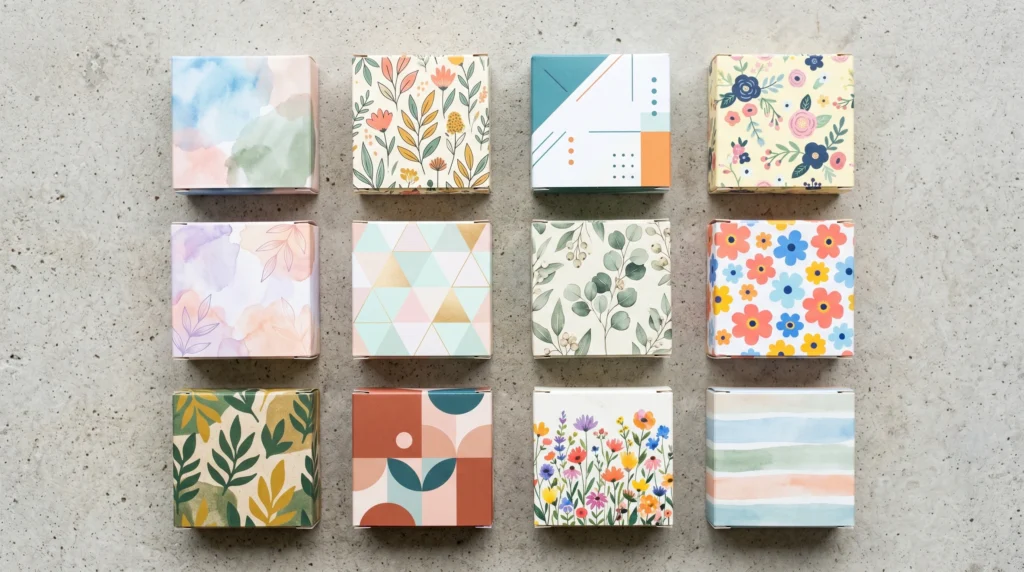
No plates. No setup fees. No minimum order quantity. Digital printing fires ink directly from a digital file onto coated paperboard or SBS board using inkjet or laser technology.
This is the technique that changed everything for small soap packaging brands. You can print 50 custom printed soap boxes for a market test, update the design next week, and run 200 for a holiday edition all without reprinting plates.
What makes it exceptional in 2026: Modern digital printing presses support UV-LED ink, food-safe ink, water-based ink, and aqueous coating making them viable for eco-friendly soap box printing that meets FDA 21 CFR 175/176 personal care packaging standards.
Real numbers: No plate cost. Cost per unit: $1.50–$4.00 for short runs, dropping toward $0.80 at 500+ units. Packaging turnaround time is typically 3–7 days.
Trending stat: Short-run digital packaging is projected to account for 35–45% of all North American packaging orders by 2027 the fastest-growing segment in box printing.
Best pairing: Soft-touch coating for a velvety premium feel. Spot UV coating over a matte base for dramatic contrast on luxury soap boxes.
Watch out for: Slightly narrower color gamut than offset for very specific Pantone color matching. Per-unit cost remains higher at large volumes.
3. Flexographic Printing Eco Brands’ Best Friend
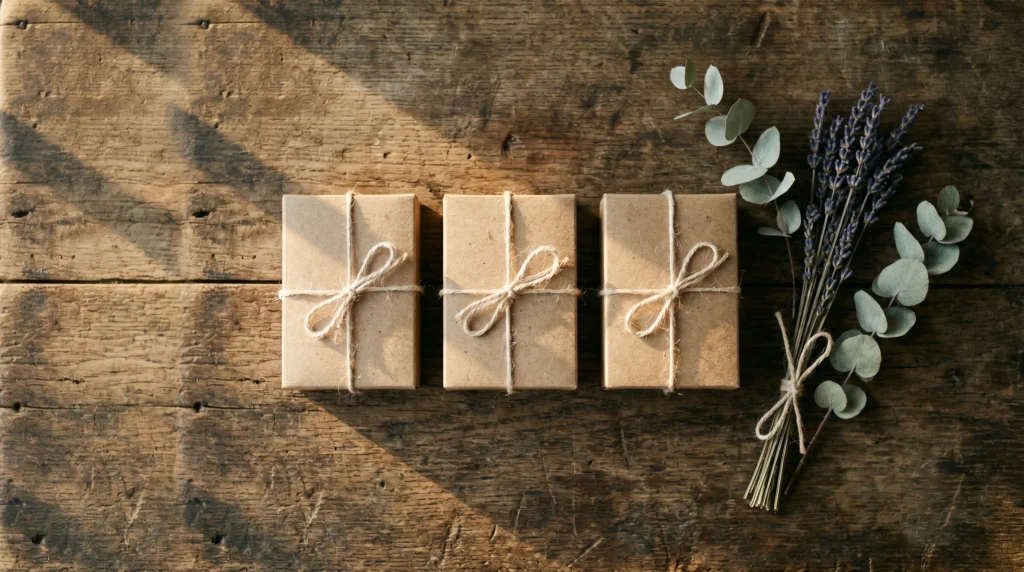
Flexographic printing (flexography) uses flexible rubber or photopolymer plates and fast-drying inks on roll-fed Kraft paper, corrugated cardboard, and other substrate printing materials.
This is the go-to method for wholesale soap packaging printing USA at scale especially for brands committed to sustainable soap box printing. The process pairs naturally with water-based ink (low VOC, low migration) and FSC-certified board, making it the most widely certified eco-friendly packaging printing method available.
Real numbers: Setup costs $300–$800 per color. At 5,000+ units on Kraft paper, cost per box falls to $0.15–$0.40. Ideal for natural soap box packaging and biodegradable soap box printing programs.
Best pairing: Aqueous coating for water resistance without plastic lamination. Perfect for eco-friendly kraft soap boxes that need durability on retail shelves.
Watch out for: Less detail than offset for photographic images. Fine halftones and thin lines can fill in keep designs bold and graphic.
4. Screen Printing Bold, Tactile, Unforgettable
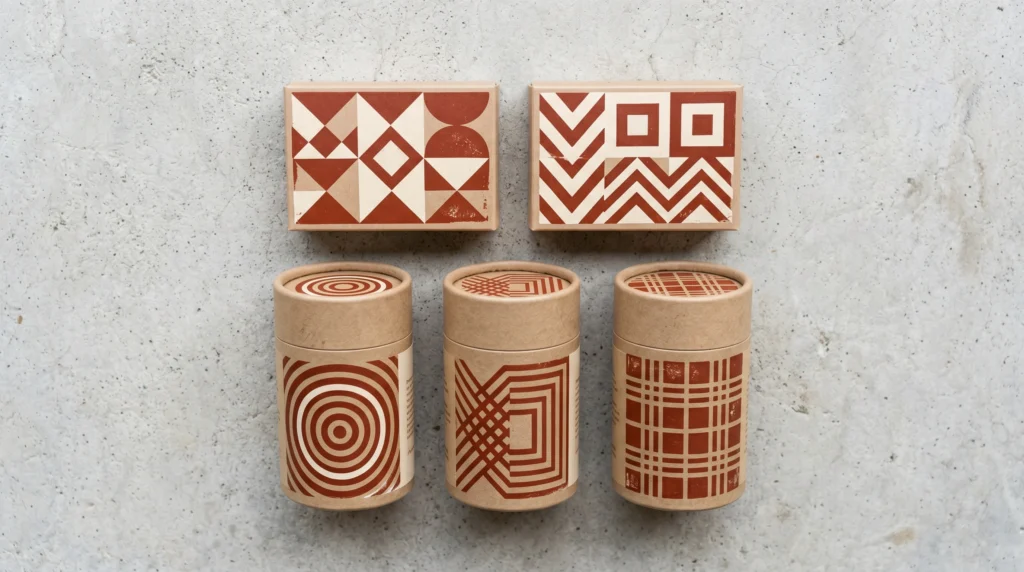
Screen printing pushes ink through a mesh stencil stretched over a frame, depositing a thick, opaque layer of ink application on the box surface. The result is a richly textured, vibrant print that stands out on retail packaging shelves.
This technique excels for bold, limited-color soap box design think single-color logo on a natural board, or a two-color pattern on a gift soap packaging box.
Real numbers: $50–$200 per screen setup. At 500+ units, very competitive. Works on unusual and textured substrates where digital printing struggles.
Best pairing: Uncoated Kraft paper or recycled board for an authentic artisan soap branding look.
Watch out for: Not suited for photographs, fine gradients, or more than 4–5 colors. Each additional color adds cost and setup time.
5. Letterpress Printing The Artisan Signature
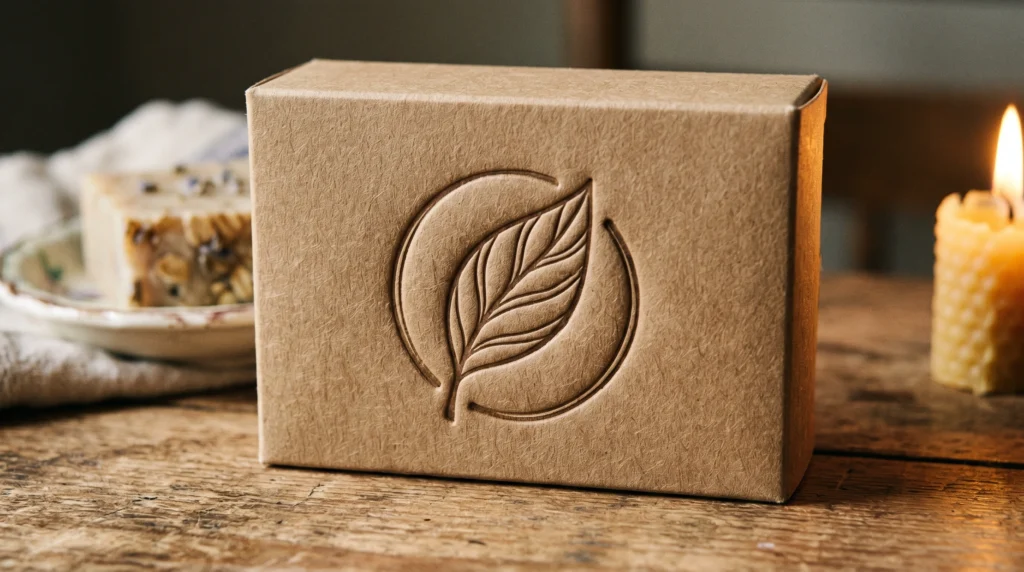
Letterpress printing presses a raised metal or polymer plate into the box surface, leaving a debossed impression with rich ink density. It is one of the oldest printing techniques and one of the most coveted for premium handmade soap packaging.
Brands that use letterpress printing for handmade soap packaging are sending a clear signal: we care about craft. That resonates deeply with the growing segment of consumers who buy artisan soap as a lifestyle statement, not just a hygiene product.
Real numbers: Higher per-unit cost ($1.50–$5.00) but no expensive plate setups at small volumes. Economical for runs of 50–500 units.
Best pairing: Uncoated, heavy-weight natural Kraft paper or cotton board. The impression shows best on soft, uncoated substrate printing materials.
Watch out for: Design limitations fine lines, small type, and complex gradients do not transfer well. Stick to bold logos and clean typography.
6. Hot Foil Stamping Instant Luxury Signal
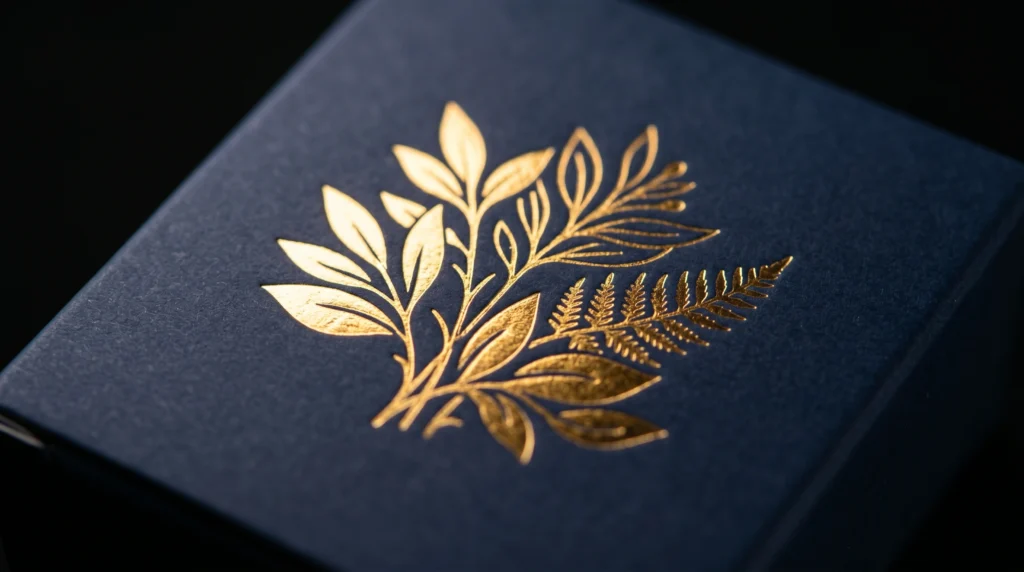
Hot foil stamping bonds a metallic or pigmented foil to the box surface using heat and a custom die. The result is a shimmering, reflective accent that reads as premium at three feet away.
Available in gold, silver, rose gold, matte black, holographic, and dozens of specialty finishes, foil stamping is the single most effective way to elevate a soap box design into the luxury soap packaging tier.
What the data says: Packages with metallic foil stamping elements show 30% higher perceived value scores in consumer studies — shoppers literally associate foil with quality before opening the box.
Best pairing: Matte lamination base + gold foil stamping on the logo = the classic luxury formula. Try soft-touch coating + rose gold foil for skincare-adjacent artisan soap branding.
Watch out for: Fine foil text should stay above 6–7 pt. Die registration tolerance is ±0.2–0.3 mm work with experienced custom soap box manufacturers who run tight dielines.
7. Embossing and Debossing Feel the Difference
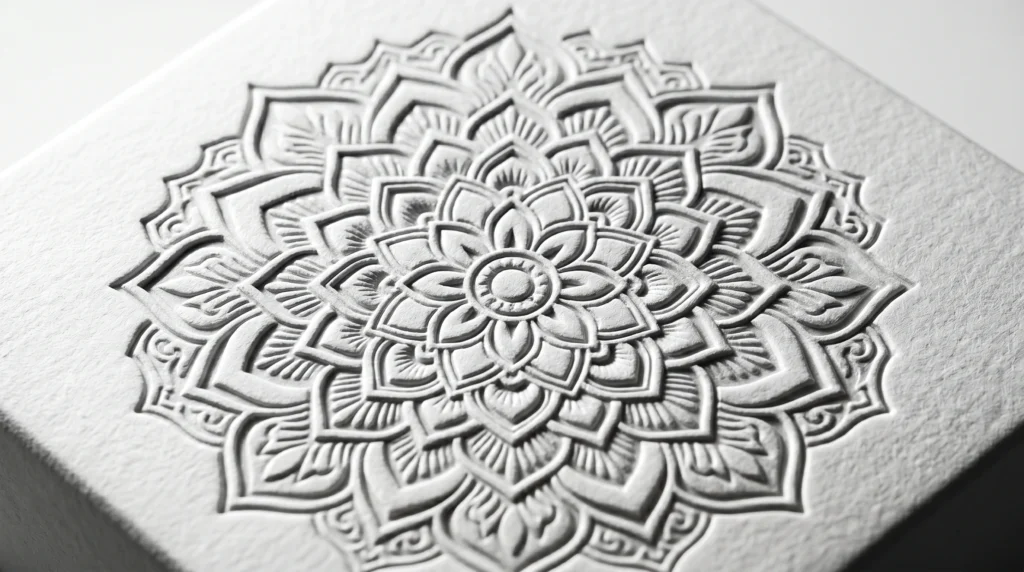
Embossing raises a design above the soap box surface. Debossing presses it below. Both add three-dimensional, haptic texture that print alone cannot achieve.
These techniques are especially powerful for minimalist soap packaging design where a clean, unprinted box uses texture instead of color to communicate brand identity. A single debossed logo on a white coated paperboard box says more than a cluttered design ever could.
Best pairing: Soft-touch coating with debossed logo (incredibly tactile), or foil stamping combined with embossing for a multi-dimensional luxury finish on gift soap packaging.
Watch out for: Requires a minimum board weight (at least 16pt) or fine details collapse. Every embossing job needs a custom die factor $150–$500 into your first-run budget.
8. UV Printing and Spot UV Coating The Contrast Trick
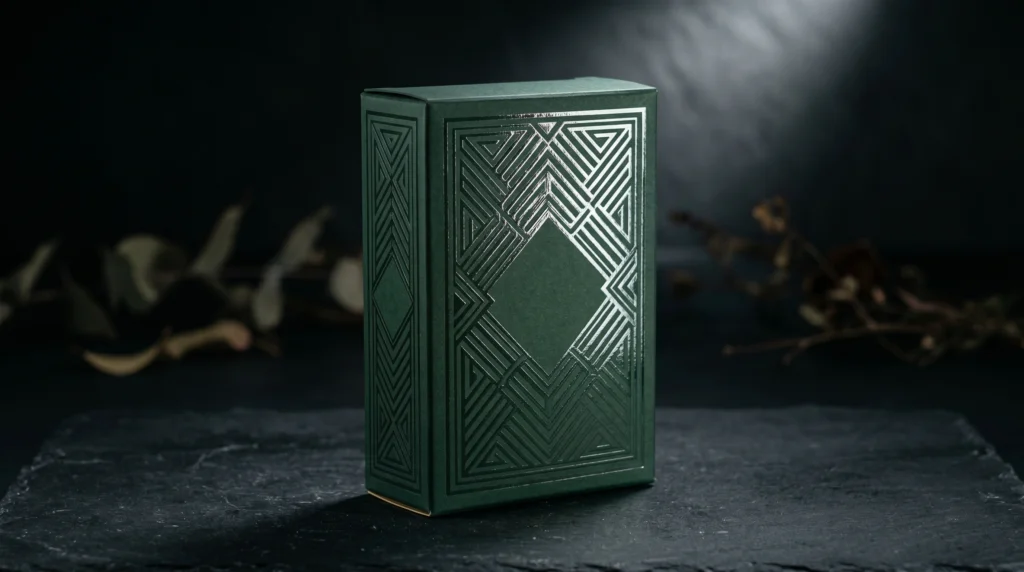
UV printing cures ink instantly under ultraviolet light, producing brilliant, scratch-resistant colors. Spot UV coating applies a clear gloss layer to specific design elements logo, pattern, icon over a matte lamination base.
The visual contrast between the flat matte and the high-gloss spot UV accent creates what designers call the “stealth luxury” effect the eye is drawn to the glossy element even before the brain processes what it is.
UV-LED printing is the 2026 evolution lower heat, lower energy, shorter curing time, and compatible with water-based ink systems for eco-friendly soap box printing that meets low-migration ink standards.
Real numbers: Spot UV coating adds $0.10–$0.30 per unit. The perceived value lift it delivers far exceeds that cost.
Best pairing: Dark matte lamination base (navy, forest green, charcoal) + selective spot UV coating on logo = one of the most striking soap box designs possible in 2026.
Also Read: Benefits of Peppermint Soap for Skin
The Four Types of Print Techniques
The four classical printing techniques are:
- Relief printing ink applied from a raised surface. Includes letterpress and flexographic printing. Best for soap box printing on Kraft paper and corrugated materials.
- Intaglio printing ink transferred from recessed areas. Includes gravure/rotogravure. Used for ultra-high-volume, photographic-quality packaging print (think food and beverage at millions of units).
- Planographic printing ink applied from a flat surface using oil-water chemistry. Offset lithography is the prime example the dominant method for retail soap packaging.
- Stencil printing ink forced through a porous mesh or screen. Screen printing is the modern application excellent for bold artisan soap branding on short runs.
Digital printing is now recognized as a fifth pillar a technology-driven category with no physical printing surface, ideal for on-demand soap box printing and personalized soap packaging.
5 Finishing Techniques That Do the Heavy Lifting
Great packaging printing is just the foundation. The right print finish multiplies its impact:
| Finish | Effect | Best Pairing | Cost Add |
|---|---|---|---|
| Matte lamination | Smooth, non-reflective, premium | Spot UV, foil stamping | Low |
| Gloss lamination | Vibrant, high-shine, protective | CMYK printing, photography | Low |
| Soft-touch coating | Velvety, fingerprint-resistant, tactile | Debossing, foil | Medium |
| Aqueous coating | Water-based protection, recyclable | Eco-friendly soap box printing | Low |
| Spot UV coating | High-gloss accent on matte base | Luxury soap boxes, logos | Medium |
Substrate Printing Materials Which Board for Which Brand?
Your packaging print can only be as good as what it is printed on. Here is what the options actually deliver:
SBS board (Solid Bleached Sulfate) brilliant white, smooth surface, ideal for vivid digital printing and offset lithography. The premium choice for luxury soap packaging and bright color palette packaging.
CCNB paperboard (Clay Coated News Back) grey inner liner, coated white surface. Cost-effective for wholesale soap boxes where inner appearance is secondary to outer print quality.
Kraft paper natural brown, recycled fiber content, rustic texture. The top choice for FSC-certified soap boxes and biodegradable soap box printing. Pairs beautifully with letterpress and screen printing for authentic artisan soap branding.
Coated paperboard smooth printing surface with excellent color reproduction. Standard for mid-range retail packaging across all major box printing methods.
Corrugated cardboard double-wall protection. Essential for wholesale soap packaging printing USA via mail order, shipping, or club store retail where structural integrity matters more than print finesse.
Trending Techniques and What They Mean for Your Brand
On-demand soap box printing via digital printing has made seasonal, limited-edition, and event-specific soap box design genuinely affordable for brands of any size. You no longer need to commit to 10,000 units of a holiday design.
Smart packaging with QR code soap labels is growing fast. Brands embed QR codes into the box design to link customers to ingredient sourcing stories, how-to tutorials, loyalty sign-ups, or brand founder videos turning a soap box into a content channel.
Hybrid printing combining digital printing speed with flexographic printing economics is gaining traction for medium runs (1,000–5,000 units) where neither pure method is optimal. Several custom soap box manufacturers in the USA now offer this as standard.
UV-LED printing is replacing conventional UV curing across the industry. It reduces energy consumption by up to 50%, produces zero ozone emissions, and delivers equal or superior color reproduction a direct win for sustainable soap box printing programs.
Creative Soap Packaging Design Ideas That Actually Sell
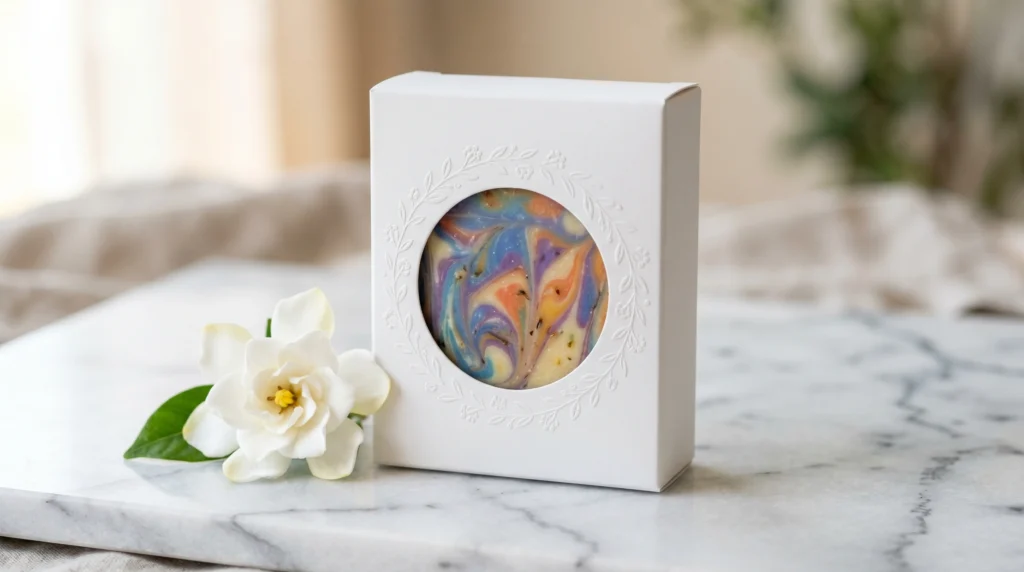
These designs leverage the techniques above and perform strongly on retail shelves and in unboxing experience social content:
The Stealth Luxury Box dark matte lamination with spot UV coating logo accent and a single line of debossed pattern border. No foil, no color just texture and contrast. Communicates premium without screaming it.
The Kraft Artisan Stack natural Kraft paper sleeve with letterpress logo, twine tie, and a small wax seal. Sells the story of handcrafted, small-batch soap before the customer reads a word. Powerful for artisan soap branding at farmers markets and boutique retail.
The Gift-Ready Magnetic Box rigid board with soft-touch coating exterior, gold foil stamping, and a magnetic closure lid. Interior printed with a pattern or brand story. Turns a bar of soap into a gift that justifies a $20+ price point.
The Window Reveal Box tuck end box with a die cut window and recycled film insert, letting customers see the actual soap bar. Digital printing on the exterior. Ideal for handmade bars with beautiful swirl patterns or colors.
The Seasonal Limited Run digital printing with variable data. Each box in a holiday run gets a slightly different pattern or color variant, making every purchase feel exclusive. Zero extra cost with modern on-demand soap box printing setups.
The Hexagonal Statement Box geometric form with screen printing in two bold colors. Stands upright on shelves, photographs exceptionally well for social media. A standout creative soap packaging design for Instagram-native brands.
How to Choose: 60-Second Decision Framework
Step 1
What is your order size? Under 500 units → Digital printing 500–5,000 units → Digital or flexographic printing Over 5,000 units → Offset lithography or flexographic printing
Step 2
What is your brand positioning? Luxury / gift → Add hot foil stamping + embossing + soft-touch coating Eco / natural → Kraft paper + water-based ink + aqueous coating + FSC certification Artisan / handcrafted → Letterpress or screen printing on uncoated board Mass market / value → Offset or flexography with gloss lamination
Step 3
What finish do you want? Premium tactile → Soft-touch coating + debossing Visual drama → Spot UV coating over matte lamination Eco-forward → Aqueous coating (no plastic laminate) Classic shine → Gloss lamination
Frequently Asked Questions
What are the four types of print techniques?
The four classical print techniques are relief printing (letterpress, flexography), intaglio printing (gravure), planographic printing (offset lithography), and stencil printing (screen printing). Digital printing is now universally recognized as a fifth category and the fastest-growing one in soap box printing.
What are the 8 types of printing methods?
The 8 printing methods most relevant to custom soap packaging are: offset lithography, digital printing, flexographic printing, screen printing, letterpress printing, gravure/rotogravure, hot foil stamping, and UV/UV-LED printing. Each brings a different combination of print quality, cost, packaging turnaround time, and material compatibility.
What are the five printing methods?
The five core printing methods for soap box design are offset lithography (volume + quality), digital printing (agility + personalization), flexographic printing (eco-scale), screen printing (bold visual impact), and letterpress (artisan tactile luxury). Together they cover every production scale, budget level, and brand positioning in the soap packaging market.
What are some creative soap packaging designs?
The most effective creative soap packaging designs in 2026 include: dark matte lamination with spot UV coating logo (stealth luxury), natural Kraft paper with letterpress and twine (artisan authenticity), rigid magnetic closure box with soft-touch coating and foil stamping (premium gifting), die cut window boxes showing the soap bar (transparency and trust), hexagonal boxes with bold screen printing (social media standout), and QR code smart packaging linking to brand stories (digital engagement).
Is digital printing or offset better for small soap businesses?
Digital printing wins for small soap packaging businesses every time. No plate costs, no minimum order quantity, fast packaging turnaround time, and the flexibility to test designs before committing. Offset lithography only becomes more economical above 5,000–10,000 units.
What is the most eco-friendly soap box printing method?
Flexographic printing with water-based ink on FSC-certified Kraft paper is the leading sustainable combination. UV-LED printing reduces energy consumption by up to 50% vs. conventional UV. Pair either with aqueous coating instead of plastic lamination for a fully biodegradable soap box printing solution.
What certifications should I verify with my soap box printer?
Ask for: FSC certification (responsible fiber sourcing), G7 / ISO 12647 (color consistency), BRCGS PM (packaging safety), FDA 21 CFR 175/176 compliance (personal care contact-adjacent inks), and SGP (Sustainable Green Printing Partnership) for overall environmental process standards.
How does CMYK printing differ from Pantone color for soap boxes?
CMYK printing mixes four ink colors to simulate a full color range accurate for photography and complex imagery. Pantone color uses pre-mixed spot inks for exact, brand-specific color matching (your precise shade of forest green or coral, every time). For retail packaging where brand color consistency matters, Pantone is worth the small additional cost per color.