Have you ever stepped out of the shower feeling tight, dry, or a little itchy? You are not imagining things. The culprit could be something as simple as the pH of soap you are using every day. Understanding soap pH levels is one of the smartest things you can do for your skin health. This complete guide breaks it all down in plain language from the science of saponification to choosing the best pH balanced soap for your specific skin type. Let’s dive in!
What Is pH and Why Does It Matter for Soap?
The term pH stands for “potential of hydrogen.” It is a pH scale that runs from 0 to 14. A reading of 7 is perfectly neutral. Anything below 7 is acidic, and anything above 7 is alkaline. Pure water sits right at 7.
Here is an interesting fact: solid soap bars do not actually have a pH until they are dissolved in water. The moment soap meets water, the hydrogen ion concentration in the solution becomes measurable, and that reading tells you a lot about how the soap will interact with your skin.
Quick Reference: Lemon juice is around pH 2. Baking soda is around pH 9. Traditional bar soap typically lands between pH 9 and 10.
The Natural pH of Healthy Skin
Your skin is naturally slightly acidic. Normal healthy skin has a pH range of 5.4 to 5.9. This slight acidity creates what scientists call the “acid mantle” a thin, protective film that sits on the surface of your skin. The acid mantle plays a critical role in:
- Skin barrier function: It keeps moisture locked in and harmful bacteria locked out.
- Skin microbiome balance: It supports the beneficial bacteria that naturally live on your skin.
- Enzyme activity: Key enzymes that produce and maintain skin lipids work best at an acidic pH around 4.5 to 5.6.
- Fighting harmful bacteria: Bacteria linked to acne-prone skin and skin infections thrive when skin pH rises.
When you wash with a high pH soap, you temporarily disrupt this acid mantle. For most healthy people, the skin rebalances within a few hours. But repeated, long-term use of alkaline soap can lead to chronic dryness, irritation, and even changes in your skin microbiome.
Why Is Soap Naturally Alkaline? The Science of Saponification
Traditional bar soap is alkaline by nature, and the reason comes down to chemistry. Soap is made through a process called saponification a chemical reaction where fats or oils (like olive oil or coconut oil) are combined with a strong base, typically sodium hydroxide (NaOH) for solid bars or potassium hydroxide (KOH) for liquid soap.
During saponification, the oils break down into fatty acids and glycerol. The fatty acids combine with the alkali to form soap molecules. The result? A product that is inherently alkaline, usually landing between pH 8 and 10.
If the saponification is incomplete or there is a slight excess of alkali (lye), the final bar soap pH can push even higher sometimes above 11, which can feel harsh on the skin barrier. This is why soap curing time matters so much in cold process soap making. Allowing your handmade soap to cure properly lowers the soap pH level gradually and reduces any risk of residual lye.
pH Levels by Soap Type
Not all soaps are created equal. Here is how different soap types compare on the pH scale:
| Soap Type | pH Range | Best For |
| Cold process soap | 8 – 10 | Normal / oily skin |
| Hot process soap | 8 – 10 | Normal / combination skin |
| Castile soap | 9 – 11 | Household cleaning, hair |
| Commercial bar soap | 9 – 10 | General cleansing |
| Syndet bar (soap-free) | 5.5 – 7 | Sensitive / dry skin |
| pH-balanced liquid cleanser | 4.5 – 6.5 | All skin types, eczema |
| Glycerin soap | 9 – 10 | Normal / slightly dry skin |
What Is the Best pH for Soap?
This is one of the most common questions in skincare, and the answer depends on who you ask and what kind of soap you mean.
For traditional true soap (made with lye and oils), a pH between 8 and 10 is completely normal and safe. Most well-made cold process soaps and hot process soaps fall in this range. A soap pH above 11 may indicate incomplete saponification and can feel harsh on skin.
For sensitive skin, eczema, rosacea, or compromised skin barriers, dermatologists often recommend pH-balanced cleansers or syndet bars with a pH between 4.5 and 6.5. These soap-free cleansers are formulated to stay closer to your skin’s natural acid mantle, minimizing disruption.
For oily or acne-prone skin: Look for mildly alkaline soaps in the pH 7 to 8 range. For dry or sensitive skin: Choose a syndet bar or fragrance-free soap around pH 5.5 to 6.5. For normal skin: Most soaps work well just avoid extremes.
Pro Tip: “pH-balanced” on a label does not always guarantee skin safety. Always check the full ingredient list and look for synthetic surfactants, harsh fragrances, or known irritants.
Also Read: Benefits of Peppermint Soap for Skin
What pH Is Dove Soap?
Dove is one of the most popular and most frequently recommended soaps by dermatologists and for good reason. The iconic Dove Beauty Bar is technically not a “true soap” at all. It is a syndet bar (synthetic detergent bar), which means it is formulated without the traditional saponification process.
The Dove Sensitive Skin Beauty Bar has a pH of approximately 5.5 to 7 significantly closer to your skin’s natural acid mantle than most regular bar soaps. That is why it leaves skin feeling noticeably softer and less tight after washing. It also contains moisturizing cream (one-quarter of the bar), making it a popular choice for dry skin and sensitive skin.
Many users with eczema-prone skin, rosacea, and general skin irritation report visible improvement within two to four weeks of switching to Dove Sensitive. It is fragrance-free, hypoallergenic, and dermatologist tested making it a smart everyday choice for skin hydration and gentle cleansing.
Why Is Amish Soap So Good?
Amish soap has earned a devoted following, and once you understand how it is made, it is easy to see why. Traditional Amish soap is handcrafted using time-honored cold process soap making methods, often featuring simple, high-quality natural oils like lard, tallow, coconut oil, and sometimes olive oil. These are the same fatty acids that have been used in soap making for centuries.
What makes Amish soap stand out?
- Rich in natural glycerin: Unlike commercial soaps that strip out the glycerin (and sell it separately), handmade Amish soap retains all of its natural glycerin. Glycerin is a powerful skin hydration agent that draws moisture to the skin.
- No harsh additives: Most Amish soaps skip synthetic fragrances, artificial colors, and chemical preservatives common culprits behind skin irritation.
- Proper curing: Amish soap makers allow their bars to cure for four to six weeks. This soap curing time lowers the soap pH level naturally, making the final bar gentler and longer-lasting.
- Simple, skin-friendly ingredients: The minimal ingredient list reduces the chance of allergic reactions and supports a healthy skin barrier function.
The soap pH of Amish soap typically falls between 8 and 10 in the normal range for cold process soap. While it is not a pH-balanced syndet, the generous glycerin content and absence of harsh additives make it feel much gentler than most commercial soaps.
What Soap to Use for TMAU (Trimethylaminuria)?
TMAU, or Trimethylaminuria, is a rare metabolic condition that causes the body to produce trimethylamine (TMA), a compound with a strong fishy odor. Managing TMAU requires a comprehensive approach, and soap choice plays a supporting role.
For people with TMAU, most healthcare providers recommend:
- Mildly acidic soaps or pH-balanced cleansers: A soap pH around 5.5 to 6.5 can help maintain the skin’s acid mantle. Because TMA is a base, a slightly acidic environment on the skin can help neutralize the compound and reduce odor.
- Soap-free syndet bars: Gentle syndet bars with a low pH are often better tolerated and less likely to cause skin irritation with frequent washing.
- Fragrance-free, hypoallergenic formulas: Fragrance can trigger skin sensitivity and mask the real issue. Choosing fragrance-free soap helps you monitor your skin’s response accurately.
- Baking soda caution: Some TMAU management protocols mention topical baking soda but its high alkaline pH (around 9) can disrupt the skin barrier over time. Always consult a physician or dermatologist before using it regularly.
If you have TMAU, please always work with a qualified medical professional. Soap is one small part of a larger management plan that includes dietary changes and sometimes medications.
How to Test the pH of Your Soap at Home
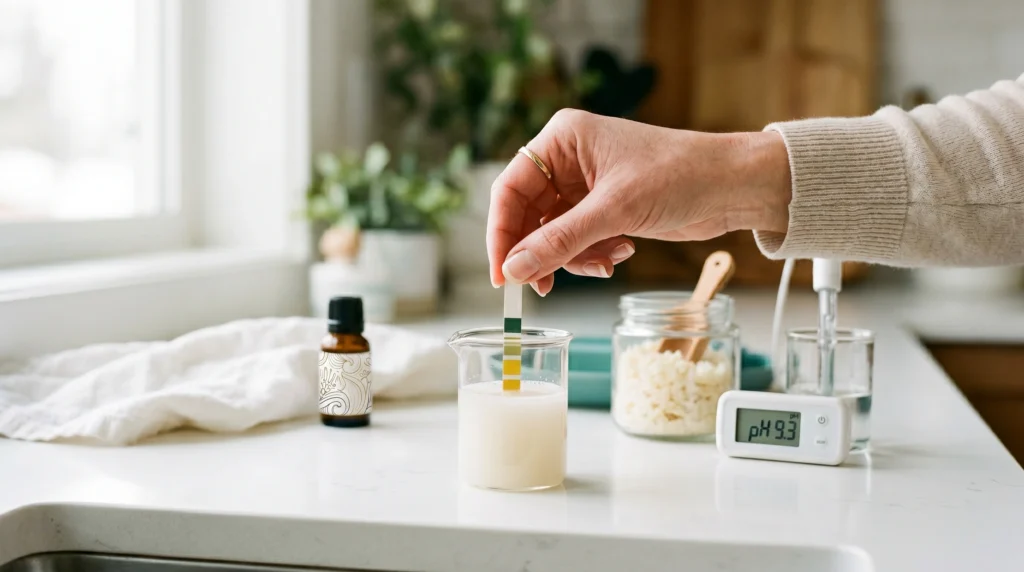
Curious about the soap pH level of your current bar? Testing is easy and inexpensive. Here is how:
- Grate or shave a small amount of your soap and mix it into distilled water to create a 1% solution. Let it sit for 24 hours.
- Use a digital pH meter for the most accurate results. High-quality pH strips also work but may be slightly less precise.
- Read the result. Most true soaps will show pH 8–10. If it reads above 11, the soap may have excess lye and may irritate skin. If it reads below 7, it is likely a syndet bar or soap-free cleanser.
Important: Never rub water directly on solid soap to test pH this does not give you an accurate reading. And please skip the old-school “zap test” (touching soap to your tongue) it is unsafe and unreliable!
Choosing the Right Soap for Your Skin Type
Here is a practical guide to finding your perfect match:
- Dry or sensitive skin: Look for a syndet bar or pH-balanced liquid cleanser with pH 5.5 to 6.5. Brands like Dove Sensitive and CeraVe are widely recommended by dermatologists.
- Oily or acne-prone skin: A mildly alkaline bar soap with pH 7 to 8 can help cleanse excess oil without over-stripping. Look for fragrance-free formulas.
- Eczema-prone skin: Dermatological guidance strongly favors acidic cleansers with pH below 6.65 to support the skin’s natural skin barrier function and reduce inflammation.
- Normal skin: You have the most flexibility! Most soaps in the pH 7 to 10 range will work fine, especially if they include moisturizing ingredients like glycerin soap formulas.
- Intimate areas: Always use a soap-free cleanser specifically formulated for intimate hygiene, with a pH between 4.5 and 5.5 to match the natural environment of that delicate skin.
Trending Skincare Topics Related to Soap pH (2026)
The world of skincare is always evolving. Here are the biggest trending related words and topics shaping the conversation around soap pH right now:
- Acid mantle repair: With more people understanding the skin barrier, products designed to actively restore the acid mantle are exploding in popularity.
- Skin microbiome soap: The connection between skin pH balance and the skin microbiome is a hot topic. Consumers are seeking prebiotic soap and microbiome-friendly cleansers.
- Syndet bar vs bar soap: The debate between traditional bar soap (pH 9–10) and syndet bars (pH 5.5–7) continues to grow as consumers become more ingredient-savvy.
- Squeaky clean skin myth: The idea that squeaky clean equals healthy is being actively debunked. That tight, squeaky feeling is actually a sign your skin pH and skin barrier function have been disrupted.
- Turmeric kojic acid soap: Brightening soaps featuring turmeric and kojic acid are booming, especially in the glow and hyperpigmentation niche.
- Castile soap uses: Searches for castile soap alkalinity and household uses remain consistently high it is a true evergreen topic.
The Connection Between Soap pH and Packaging

Great soap deserves great packaging and that is true whether you are a passionate cold process soap maker, a small business owner, or a brand building a loyal customer base. When customers pick up a bar at a market or receive one in a gift box, the first impression is everything. That is why so many artisan and commercial soap brands are choosing Printed Custom Soap Boxes to showcase their product. A beautifully printed, custom-designed box not only protects your soap during transit but also communicates your brand values natural ingredients, skin-friendly pH-balanced formulas, cruelty-free production right at first glance. From minimalist kraft designs to vibrant full-color prints listing soap pH levels, natural oils, and certifications, custom packaging elevates any soap brand from ordinary to unforgettable.
Frequently Asked Questions
What is the best pH for soap?
For traditional true soap made with sodium hydroxide or potassium hydroxide, a pH between 8 and 10 is considered normal and safe. Anything above 11 can be overly harsh. For sensitive skin, dry skin, or eczema, a pH-balanced syndet bar or liquid cleanser with pH 4.5 to 6.5 is generally recommended by dermatologists to keep the acid mantle intact.
What pH is Dove soap?
The popular Dove Beauty Bar technically a syndet bar rather than a traditional soap has a pH of approximately 5.5 to 7. This makes it significantly milder than most conventional bar soaps. Its formulation includes moisturizing cream and is hypoallergenic and fragrance-free in the Sensitive variant, which is why it is so widely recommended for dry skin and sensitive skin care.
Why is Amish soap so good?
Amish soap is beloved because it uses traditional cold process soap making with minimal, simple ingredients often lard, tallow, coconut oil, or olive oil and retains all of the natural glycerin produced during saponification. Commercial soap manufacturers typically remove glycerin for use in other products, leaving their bars drying. Amish soap is also fragrance-free, free of harsh synthetic surfactants, and properly cured to reduce the soap pH level to a comfortable range. The result is a deeply moisturizing, long-lasting bar that respects the skin barrier.
What soap should I use for TMAU?
For people managing TMAU (Trimethylaminuria), mildly acidic soaps or pH-balanced cleansers with a pH of 5.5 to 6.5 are generally recommended. Since trimethylamine is a base, a slightly acidic skin pH balance can help neutralize the compound on the skin and reduce odor. Choosing syndet bars, fragrance-free soap, and gentle cleansers without harsh additives is important. Always work with a qualified physician for personalized advice.
How do I test the pH of homemade soap?
Dissolve a small amount of grated soap in distilled water to make a 1% solution. Wait 24 hours, then use a digital pH meter or quality pH strips to measure the result. Normal cold process soap will read pH 8 to 10. Avoid testing by rubbing wet fingers on the bar this gives inaccurate readings.
Does soap pH permanently change my skin’s pH?
No not with brief, normal use. Your skin is remarkably resilient. After washing with alkaline soap, the acid mantle typically restores itself within 30 minutes to a few hours in healthy individuals. However, repeated and prolonged exposure to high pH soaps can cause chronic disruption, especially for people with eczema, rosacea, or naturally dry or sensitive skin.
Is castile soap safe for skin?
Castile soap made from plant-based oils like olive oil and coconut oil has a soap pH of 9 to 11, which is on the higher end of alkaline. It is safe for most normal skin types when used briefly and rinsed well. However, its high pH makes it less ideal for sensitive skin, acne-prone skin, or intimate cleansing. It excels as a household cleaner and works well for hair and body washing in people with resilient skin.
Are natural soaps better for skin pH than commercial soaps?
Not necessarily. Natural soaps like cold process soap and Amish soap are typically pH 8 to 10 the same range as many commercial bar soaps. What they DO offer is retained natural glycerin, simpler ingredients, and no artificial additives which many people find gentler overall. If your skin pH balance is a priority and you have sensitive skin, a syndet bar or pH-balanced liquid cleanser may be a better fit regardless of whether it is “natural.”
What is the difference between syndet bars and regular soap?
Syndet bars (short for synthetic detergent bars) are made from lab-formulated surfactants rather than saponified oils. This allows manufacturers to precisely control the soap pH level typically setting it between 5.5 and 7 to closely match the skin’s natural acid mantle. Regular bar soap made via saponification is inherently alkaline (pH 9–10). Syndet bars are often recommended for dry skin, eczema-prone skin, and anyone seeking a gentle soap experience.
Can high pH soap cause acne?
Yes, repeatedly using high pH soap can contribute to acne-prone skin flare-ups. When alkaline soap raises skin pH, it disrupts the acid mantle and alters the skin microbiome, creating an environment where harmful bacteria including those linked to acne thrive. Switching to a mildly alkaline soap at pH 7 to 8 or a pH-balanced cleanser may help reduce breakouts for some people.
Final Thoughts
Understanding the pH of soap is genuinely empowering. It transforms the way you shop, the way you cleanse, and the way you think about skin health. Whether you are drawn to the heritage charm of Amish soap, the gentle comfort of Dove Sensitive, the rich lather of a castile soap, or the precision of a pH-balanced syndet bar, knowing your numbers puts you firmly in control.
Your skin barrier works hard for you every day. Give it the respect it deserves by choosing a soap with the right soap pH level for your skin type. And remember that squeaky clean feeling? It is not a sign of cleanliness. It is your acid mantle calling out for a little more kindness.